Entradas

Guías prácticas para el uso y aplicación de bioproductos del proyecto LIGNOBIOLIFE
Imagen
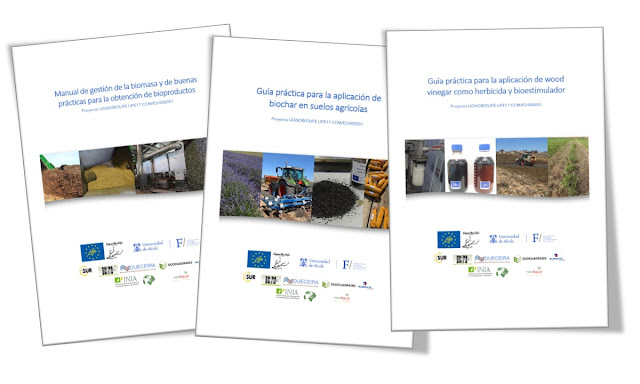
El proyecto LIGNOBIOLIFE dispone, en el apartado de documentación de su sitio web, las guías prácticas para el uso y aplicación de bioproductos. Estos documentos recogen, de forma sencilla y resumida, unas pautas y consideraciones que permitan replicar las experiencias del proyecto LIGNOBIOLIFE a aquellas personas interesadas en la gestión y el uso de bioproductos. Manual de gestión de la biomasa y de buenas prácticas para la obtención de bioproductos Guía práctica para la aplicación de biochar en suelos agrícolas Guía práctica para la aplicación de wood vinegar como herbicida y bioestimulante
Practical guides for the use and application of bioproducts from the LIGNOBIOLIFE project

Imagen
The LIGNOBIOLIFE project has, in the documentation section of its website, practical guides for the use and application of bioproducts. These documents collect, in a simple and summarized way, guidelines and considerations that allow replicating the experiences of the LIGNOBIOLIFE project to those people interested in the management and use of bioproducts. Practical guide for biomass management and good practices for obtaining bioproducts Practical guide for the application of biochar in agricultural soils Practical guide for the application of wood vinegar as a herbicide and biostimulant

Informe Layman y Plan After-LIFE del Proyecto LIGNOBIOLIFE

Imagen
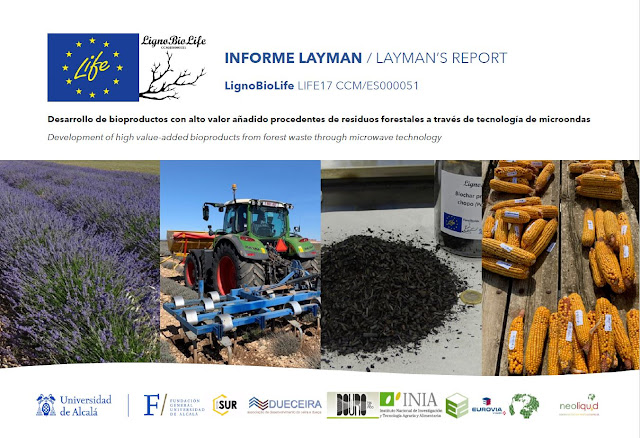
El proyecto LIGNOBIOLIFE dispone, en el apartado de documentación de su sitio web, el Informe Layman , donde se resume de una forma sencilla y visual la descripción del proyecto, sus objetivos, resultados y principales conclusiones. Igualmente, puede consultarse también el  Plan After-LIFE , que hace una evaluación del proyecto tras su conclusión, así como el establecimiento de nuevos objetivos y proyectos relacionados, que dan continuidad a las acciones emprendidas por este proyecto.

Layman's Report and After-LIFE Plan of the LIGNOBIOLIFE Project

Imagen
The LIGNOBIOLIFE project includes the Layman's Report in the documentation section of its website, which summarizes the description of the project, its objectives, results and main conclusions in a simple and visual way. Likewise, you can also consult the After-LIFE Plan , which evaluates the project after its conclusion, as well as the establishment of new objectives and related projects, which give continuity to the actions undertaken by this project.

Pruebas en plantaciones de guisantes con Biochar y abono incorporado

Imagen
Dentro de las pruebas de experimentación del Proyecto LIGNOBIOLIFE se ha procedido a la plantación de 3,5 ha de guisantes, a los que se  incorpora en el momento de la siembra una mezcla de fertilizante y Biochar en proporción 2:1. La prueba desarrollada en el término de Mondéjar (Guadalajara) consistió en que en el momento de la siembra se incorporan al suelo las semillas del guisante y la mezcla, quedando ésta alrededor de la semilla. Se espera que las demostradas capacidades del Biochar como mejorante del suelo, puedan producir un beneficio en el desarrollo temprano de la planta y en un mejor resultado en germinación y crecimiento. Para ello se usó la maquinaria estándar de siembra sin necesidad de ningún ajuste. El Biochar que se ha utilizado en esta ocasión ha sido producido por el proyecto a partir de hueso de aceituna. Los resultados se analizarán para ver la eficacia o no de la prueba.

Testing crops of peas with a mixture of Biochar and fertilizer

Imagen
Within the experimental tests of the LIGNOBIOLIFE Project, 3.5 ha of peas have been planted, adding a mixture of fertilizer and Biochar in a 2:1 ratio. The test was carried out in the municipality of Mondéjar (Guadalajara) and consisted in incorporating the pea seeds and the mixture into the soil while sowing, leaving the mixture around the seed. It is expected that the already demonstrated capacities of Biochar as a soil improver can produce a benefit in the early development of the plant and in a better result in germination and growth. The standard planting machinery was used without the need for any adjustment and the Biochar used this time was produced from olive pits. The results will be analyzed to know the effectiveness of this method.

Pruebas de germinación de Espinacas con mezcla Biochar y Wood Vinegar

Imagen
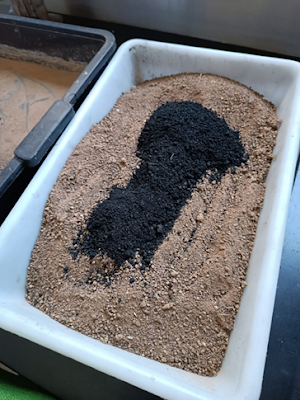
Utilizando el mismo principio que en las pruebas de Biochar mezclado con Wood Vinegar para uso agrícola, se han llevado a cabo pruebas de germinación de espinacas ( Spinacia oleracea ).  La mezcla utilizada procede de la mezcla de Biochar y Wood Vinegar ambos procedentes del tratamiento de residuos de orujillo. Esta mezcla se utilizó en porcentajes del 0, 5, 10, 20 y 30%, mezclándolo con el suelo/sustrato introducido en bandejas de germinación o alveolos, donde posteriormente se plantaron espinacas y cuya germinación ha tenido lugar en un fitotrón, lo que permite mantener unas condiciones controladas y homogéneas.  Este estudio nos ayuda a determinar los porcentajes óptimos de la mezcla en suelo para la germinación de semillas. mezcla de Biochar y Wood Vinegar en el suelo Fitotrón Laboratorio de Biología UAH. Sustrato aditivado para cultivo en alveolos (día 1) Alveolos con Spinacia Oleracea  (día 15)

Testing spinach germination using a mixture of Biochar and Wood Vinegar

Imagen
Tests on the germination of spinach ( Spinacia oleracea ) were carried out, also using a mixture of Wood Vinegar and Biochar, like in experiments with other crops. This mixture was made of both products (Wood Vinegar and Biochar) coming from orujillo (waste obtained in the production of olive oil), using different concentrations of 0, 5, 10, 20, and 30%, mixing the product with soil, and placing it in seedling trays, where spinaches were latter planted. The germination occurred in a phytotron, which allows to keep homogeneous and controlled conditions. This research helps us to determine the optimal concentration of the mixture in soil for the germination of the seeds. mixture of Biochar and Wood Vinegar on soil Phytotron in laboratory of Biology (UAH) soil with bioproduct in seeding trays (day 1) seeding trays with spinach (day 15) 

Pruebas de uso de Biochar mezclado con Wood Vinegar para uso agrícola

Imagen
Dando un paso más, se han llevado a cabo pruebas con Wood Vinegar mezclado con Biochar. Se ha probado a realizar esta mezcla con dos tipos de Wood Vinegar diferentes, uno de orujillo y otro de procedente del bambú, el cual fue suministrado por la empresa CARBONAUTEN GmbH.  Este Wood Vinegar se mezcló con Biochar procedente de orujillo y se aplicó en los bancales situados en el huerto ecológico del Jardín botánico de la Universidad de Alcalá en cantidades de 0,1 y 1,5 kg/m2, donde posteriormente se han sembrado lechugas, rabanitos y tomates.  Así mismo, se añadió a otras parcelas de suelo Biochar solo en cantidades de 1,5 kg/m2 para, al finalizar, comparar los diferentes resultados obtenidos. Los resultados obtenidos de estas pruebas nos proporcionarán datos sobre la efectividad de esta mezcla a nivel agrícola y nos permitirá comparar los resultados con los obtenidos en experiencias anteriores. añadiendo el producto al suelo bancales con vegetales después de 15 días

Testing a mixture of Biochar and Wood Vinegar for agricultural using

Imagen
Going further, new tests have been carried out, using a mixture of Wood Vinegar and Biochar. In order to make this mixture, two different kinds of Wood Vinegar have been used, one of them coming from orujillo (waste obtained in the production of olive oil) and another one coming from bamboo, provided for the company CARBONAUTEN GmbH. This Wood Vinegar was mixed with Biochar coming from orujillo and applied using different concentrations (0,1 and 1,5 kg/m2). This product was used in parcels at the ecological vegetable garden of the Botanic Garden of the University of Alcala, where lettuce, tomato, and radish were grown. Moreover, other parcels in the same vegetable garden were treated with pure Biochar (not mixed with Wood Vinegar) at a concentration of 1,5 kg/m2, to compare the difference between both products. The results obtained in these tests will provide data on the effectiveness of this product (mixture of Wood Vinegar and Biochar) in agriculture and will let us compare the res...

Jornadas del proyecto LIGNOBIOLIFE en Portugal

Imagen
Dentro de las actividades del proyecto LIGNOBIOLIFE se han desarrollado unas jornadas sobre la importancia de los bosques y la búsqueda de valor a los residuos generados en el tratamiento forestal. Las jornadas tuvieron lugar el día 15 de junio en el auditorio de Mursa (Portugal).  Las jornadas se organizaron por el socio del proyecto Douro Histórico y reunió a numerosos asistentes.  En ellas se expusieron los avances y resultados del proyecto y se tuvo un coloquio con los asistentes, integrantes de empresas forestales, administraciones y grupos de acción local. Además se aprovechó para hacer una reunión de los socios de Portugal y se diseñaron las nuevas actividades en la zona, que incluirán una nueva jornada en la zona del socio Dueceira.

Conference on LIGNOBIOLIFE project in Portugal

Imagen
Within the activities of the LIGNOBIOLIFE project, a conference has been held on the importance of forests and the search for value in the waste generated in forest treatment. The sessions took place on June 15th in the auditorium of Mursa (Portugal). The conference was organized by the association Douro Historico, one of the partners of the project, and brought together many attendees. During the sessions, the progress and results of the project were presented, and a discussion was held with the attendees, members of forestry companies, administrations, and local action groups. Furthermore, the sessions served as a meeting of the partners of Portugal and the new activities in the area were designed, which will include a new meeting in the action area of the partner Dueceira.

Pruebas de biochar en Valladolid en cultivo de zanahoria

Imagen
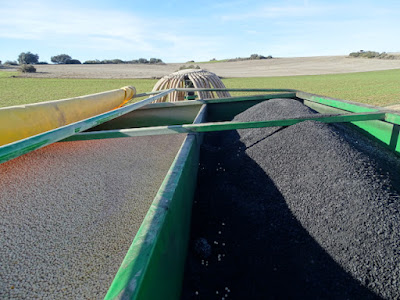
En una de las nuevas pruebas del uso del Biochar en cultivos, se ha efectuado la aplicación del producto en zonas de cultivo de zanahoria. Para ello se llegó a un acuerdo con la empresa PRIMBIO IBERICA, que ha cedido una parcela para la prueba en el término municipal de Portillo (Valladolid). Se ha usado Biochar procedente de orujillo y se ha aplicado mediante la maquinaria abonadora estándar de los agricultores de la zona. Se probarán dos concentraciones de Biochar una, de 0,66 kg/m2 y otra de 1,66 kg/m2. La zona de aplicación es una parcela con arenas que se usa desde hace años para el cultivo de la hortaliza.  Descarga del Biochar del proyecto Aplicación del biochar

Testing biochar in carrots crops of Valladolid

Imagen
In one of the new tests of the use of Biochar in crops, the application of the product in carrot crops has been demonstrated. For this purpose, an agreement was reached with the company PRIMBIO IBERICA, which has ceded the land for the test in the municipality of Portillo (Valladolid). Biochar from orujillo has been used and has been applied using the standard fertilizer machinery of farmers in this area. Two concentrations of Biochar will be tested, one of 0.66 kg/m2 and the other of 1.66 kg/m2. The area of application is a plot with sand that has been used for years to grow vegetables. charging biochar in machinery biochar application on land

Pruebas de wood vinegar como herbicida en la rosaleda y e invernaderos del Jardín Botánico de la UAH

Imagen
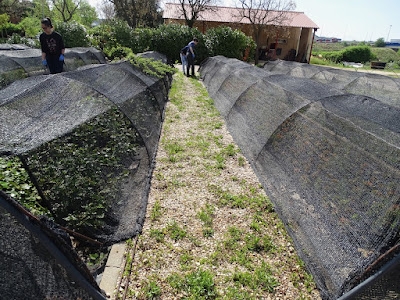
Se han efectuado pruebas de wood vinegar con aplicación manual sobre las herbáceas arvenses de los caminos de las zonas de invernadero y la rosaleda del Jardín Botánico de la Universidad de Alcalá de Henares. Se aplicó sobre las plantas y en 24 horas los resultados eran muy palpables, habiendo una alta mortalidad. Ahora hay que esperar a ver el proceso de rebrote o recuperación de las zonas tratadas y no tratadas para sacar conclusiones definitivas, si bien ha quedado claro el efecto de este tratamiento en el corto plazo (24/72 horas) secando la parte aérea de las plantas. Zona antes del tratamiento Zona después del tratamiento Zona control sin tratar Efecto a las 24 horas

Tests of wood vinegar as a herbicide in the rose garden and greenhouses of the Botanical Garden of the UAH

Imagen
Wood vinegar tests have been carried out with manual application on the herbaceous weeds of the paths of the greenhouse areas and the rose garden of the Botanical Garden of the University of Alcalá de Henares. It was applied on the plants and in 24 hours the results were very remarkable, with high mortality. Now we have to wait to see the process of regrowth or recovery of the treated and untreated areas to draw definitive conclusions, although the effect of this treatment in the short term (24/72 hours) has been made clear, drying the aerial part of the plants. study area before treatment study area after treatment control area (not treated) effect in 24h

Pruebas de wood vinegar como bioestimulador y para prevenir enfermedades fúngicas en tres hectáreas de la variedad de uva Merlot

Imagen
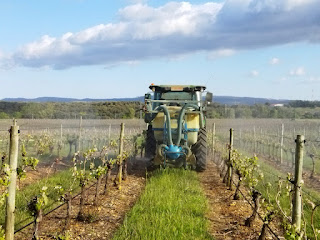
Dentro de las pruebas del proyecto, se ha llegado a una acuerdo con la Sociedad Cooperativa  La Parra (Olite, Navarra) donde se está probando  el wood vinegar junto a un inoculante de microorganismos (té de compost biodiverso) en un viñedo de uva de la variedad Merlot. La mitad del viñedo tendrá un tratamiento químico convencional para la prevención y/o tratamiento frente a enfermedades, principalmente fúngicas, como el oídio y mildiu. La otra mitad del viñedo será tratado con aplicaciones foliares de té de compost junto a wood vinegar con el objetivo de incrementar la actividad microbiana en la filosfera de las vides y prevenir las mismas enfermedades fúngicas. La frecuencia de las aplicaciones será quincenales o mensuales dependiendo de las condiciones climatológicas y se darán desde el nacimiento de las yemas hasta el envero.  Pruebas de la Cooperativa La Parra de wood vinegar como bioestimulante y para evitar enfermedades fúngicas

Tests of wood vinegar as a biostimulant and to prevent fungal diseases in three hectares of the Merlot grape variety

Imagen
As part of the project tests, an agreement has been reached with the Cooperative Society "La Parra" (Olite, Navarra) where wood vinegar is being tested together with a microorganism inoculant (biodiverse compost tea) in a vineyard of the Merlot variety. Half of the vineyard will have a conventional chemical treatment for the prevention and/or treatment of diseases, mainly fungal, such as powdery mildew and mildew. The other half of the vineyard will be treated with foliar applications of compost tea together with wood vinegar in order to increase microbial activity in the phyllosphere of the vines and prevent the same fungal diseases. The frequency of applications will be fortnightly or monthly depending on weather conditions and will be given from the birth of the buds to veraison. testing wood vinegar in vineyards, as a bioestimulant and to prevent fungal diseases

Publicamos un nuevo artículo con los resultados sobre los beneficios del biochar en cultivos hortícolas

Imagen
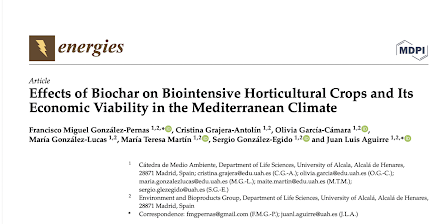
En la revista Energies, 15, 2022, ha sido publicado un artículo de los resultados obtenidos en nuestros experimentos con el uso del Biochar en cultivos hortícolas . Los resultados son muy esperanzadores con mejoras en la producción de hasta un 90% en algunos de los cultivos. Se añadieron 1 Kg y 2 Kg/m2 de Biochar y se compararon con el suelo sin Biochar. Las mejoras fueron significativas en todos los cultivos (pimientos, tomates, lechugas y rabanitos), y se calculó la mejora económica que podría obtener un agricultor en un año y en cuanto tiempo se podría recuperar la inversión. Se puede ver el artículo completo en este enlace  o clicando sobre la siguiente imagen.

We have published a new article with the results on the beneficts of biochar in horticultural crops

Imagen
In the journal Energies, 15, 2022, an article has been published on the results obtained in our experiments with the use of Biochar in horticultural crops. The results are very encouraging with improvements in production of up to 90% in some of the crops. 1 Kg and 2 Kg/m2 of Biochar were added and compared with the soil without Biochar. The improvements were significant in all the crops (peppers, tomatoes, lettuce and radishes), and the economic improvement that a farmer could obtain in a year and how long the investment could be recovered was calculated. You can see the full article at this link or by clicking on the following image.